How the BBC Computer Literacy Project Ignited a Generation of Coders
Introduction
There comes a moment when the technology you grew up with becomes a subject of history. For the 8-bit generation, that moment is now. The BBC recently released a 1992 retrospective that looks back at the first ten years of its Computer Literacy Project—a government-backed initiative designed to prepare British youth for the information age. This archive footage offers a unique, almost time-capsule perspective, capturing an era when the promise of personal computing was still fresh and optimistic. It reminds us that, before schools taught Microsoft Word, they taught programming and problem-solving with machines that had to earn their place on the desk.
The Birth of the Computer Literacy Project
Launched in the early 1980s, the Computer Literacy Project was a bold attempt to bridge the digital divide. The BBC, as the nation’s broadcaster, ran a series of television programs aimed at demystifying computers. Shows like The Computer Programme and Making the Most of the Micro introduced viewers to coding, hardware, and the potential of the new machines. But the project went beyond broadcasting: the Beeb also commissioned a purpose-built computer to accompany its educational content.
The Acorn BBC Micro: A Machine Ahead of Its Time
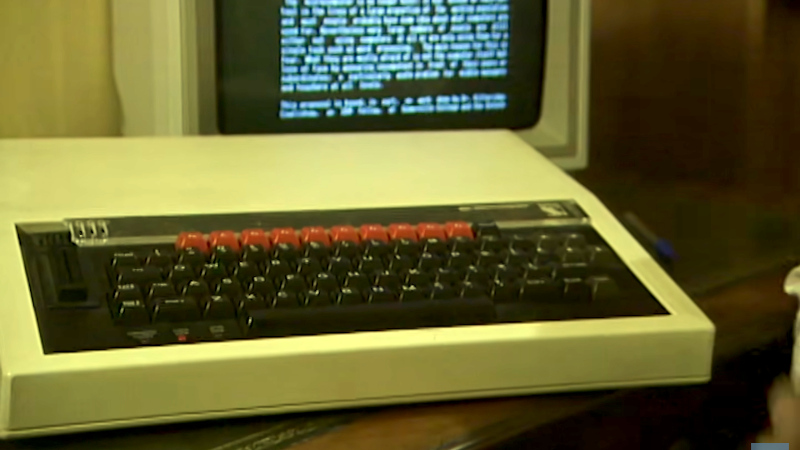
That computer was the Acorn BBC Micro. Designed by Acorn Computers, it remains one of the most feature-rich 8-bit machines ever built. With built-in networking, multiple expansion ports, and a surprisingly advanced operating system, the BBC Micro was far more capable than most competing home computers. Interviews from the archive with Acorn’s engineers reveal the care that went into its design. They didn’t just create a teaching tool; they built a platform that would later give rise to the ARM architecture—the technology that now powers billions of smartphones and embedded devices.
A Nation of Young Programmers
If you grew up in 1980s Britain, you probably remember the BBC Micro sitting in your school’s computer room. The machine was ubiquitous, and the accompanying TV programs turned coding from a niche hobby into a national pastime. Children learned BASIC, wrote simple games, and explored the basics of computer logic. The project fostered a genuine optimism about technology—a sense that knowing how to code was the key to the future. Sadly, that optimism faded in the 1990s when educational computing shifted toward teaching office applications. The torch dropped.
The Television Programs That Inspired a Generation
The project’s TV shows were more than just tutorials; they were cultural phenomena. The Computer Programme (1982) introduced the fundamentals, while Making the Most of the Micro (1983) explored real-world applications. Later, Micro Live (1984–1987) provided news and reviews, keeping the community engaged. These programs are now archived and serve as a vivid time capsule of 1980s computing culture.
Decline and Resurgence
By the mid-1990s, the Computer Literacy Project had wound down. The BBC Micro was discontinued, and schools moved toward Windows PCs. The vision of a generation of programmers gave way to a focus on basic digital literacy. It would be two decades before the spirit of the project was revived—first with the Raspberry Pi in 2012, then with the official BBC micro:bit in 2015. These inexpensive, programmable devices reignited interest in hardware hacking and coding, picking up the torch that the original Computer Literacy Project had dropped.
The Raspberry Pi and BBC micro:bit: A New Dawn
Like the BBC Micro before them, the Raspberry Pi and micro:bit were designed for education. They brought back the joy of learning by doing—and they did so with the explicit blessing of the BBC. The micro:bit, in particular, was a direct successor to the Computer Literacy Project, offering a low-cost, easy-to-use device for schools. The circle was complete.
Conclusion: Why the Project Still Matters
Looking back at the 1992 retrospective, it’s clear that the BBC Computer Literacy Project was more than a government initiative. It was a cultural movement that shaped how a generation thought about computers. The machines and programs may seem primitive by today’s standards, but the core lesson—that understanding technology empowers people—remains as relevant as ever. If you were there, you remember the excitement. If you weren’t, the archive footage is an essential glimpse into a pivotal moment in computing history.
Explore the full archive of the BBC Computer Literacy Project programs and learn more about the BBC Micro’s design.